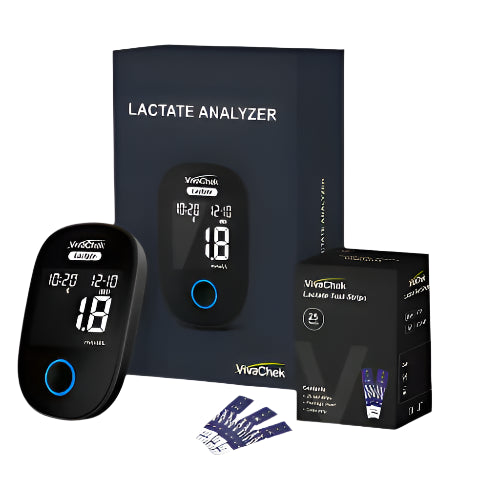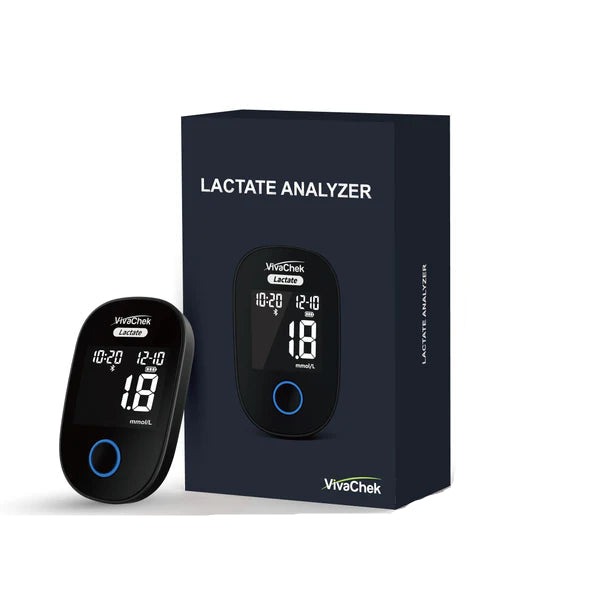

Lactate guided training for HYROX
🏋️♂️ Best Ways to Use a Lactate Meter for HYROX Training
HYROX is essentially a long, sustained threshold effort with repeated spikes. A lactate meter helps you understand how your body responds to those intensities, so you can train smarter, pace better, and avoid blowing up.
🔥 1. Identify Your Personal “Race‑Pace Zone”
HYROX is typically performed around your lactate threshold intensity—the highest effort you can sustain without accumulating fatigue too quickly.
A lactate meter helps you find the pace where your body is working hard but still stable.
How to use it:
- Perform a progressive run test (e.g., 5 min stages increasing pace).
- Measure lactate at the end of each stage.
- Look for the point where lactate begins to rise sharply. (Record pace and heart rate)
- This will coincide with a lactate level above 2.5.
This gives you:
- Your sustainable running pace for the race.
- Your target intensity for longer intervals and compromised running. Note that you must stick to your target pace or heart rate precisely, without going faster or slower. That is the secret to long-term sustainable improvement.
🏃♂️ 2. Dial in “Compromised Running” Pacing
HYROX running is never fresh—you’re always coming off a station.
Use the meter to test:
- Running after sled push/pull
- Running after burpee broad jumps
- Running after wall balls
You’ll see how quickly lactate spikes and how long it takes to stabilise.
This helps you:
- Set realistic run paces after each station
- Avoid red‑lining early
- Build resilience to station‑run transitions
🛠️ 3. Test How Different Stations Affect Your Lactate
Each HYROX station stresses the body differently.
A lactate meter helps you understand which ones spike you the most.
Typical patterns:
- Sled push/pull → huge spike
- Burpee broad jumps → fast spike
- Row/Ski → moderate, steady rise
- Wall balls → late‑race spike
Use this to:
- Adjust pacing
- Improve technique
- Plan recovery between stations
📈 4. Structure Interval Training More Precisely
Instead of guessing intensity, you can target specific lactate zones to build the right energy systems.
Useful session types:
- Threshold intervals (steady, race‑pace work)
- High‑lactate tolerance intervals (sleds, burpees, wall balls)
- Clearance intervals (alternating high/low intensity)
The meter helps you ensure:
- Threshold work stays controlled
- High‑intensity work is actually high enough
- Recovery intervals are long enough to reset
🧠 5. Improve Pacing Discipline
Many HYROX athletes go out too hard and pay for it later.
A lactate meter teaches you:
- What “too hard” actually looks like
- How quickly you accumulate fatigue
- How long you need to recover
This builds race‑day confidence and prevents early blow‑ups.
🏁 6. Simulate Race Conditions
Do a full or partial HYROX simulation and take lactate at key points.
You’ll learn:
- Which stations cause the biggest spikes
- Whether your running pace is sustainable
- How your body responds late in the race
This is one of the most valuable uses of the device.
🧩 Putting It All Together
A lactate meter helps you:
- Set your race‑pace running speed
- Understand how stations affect fatigue
- Train threshold and tolerance more precisely
- Build pacing discipline
- Simulate race conditions with data
It’s not about chasing specific numbers—it’s about learning your personal response to HYROX‑style stress and training accordingly.